Outsource the Task, Not the Thinking
The world's first Chief AI Officer has a warning: the real risk is not that AI replaces you, but that it quietly erodes the judgment that made you worth hiring.
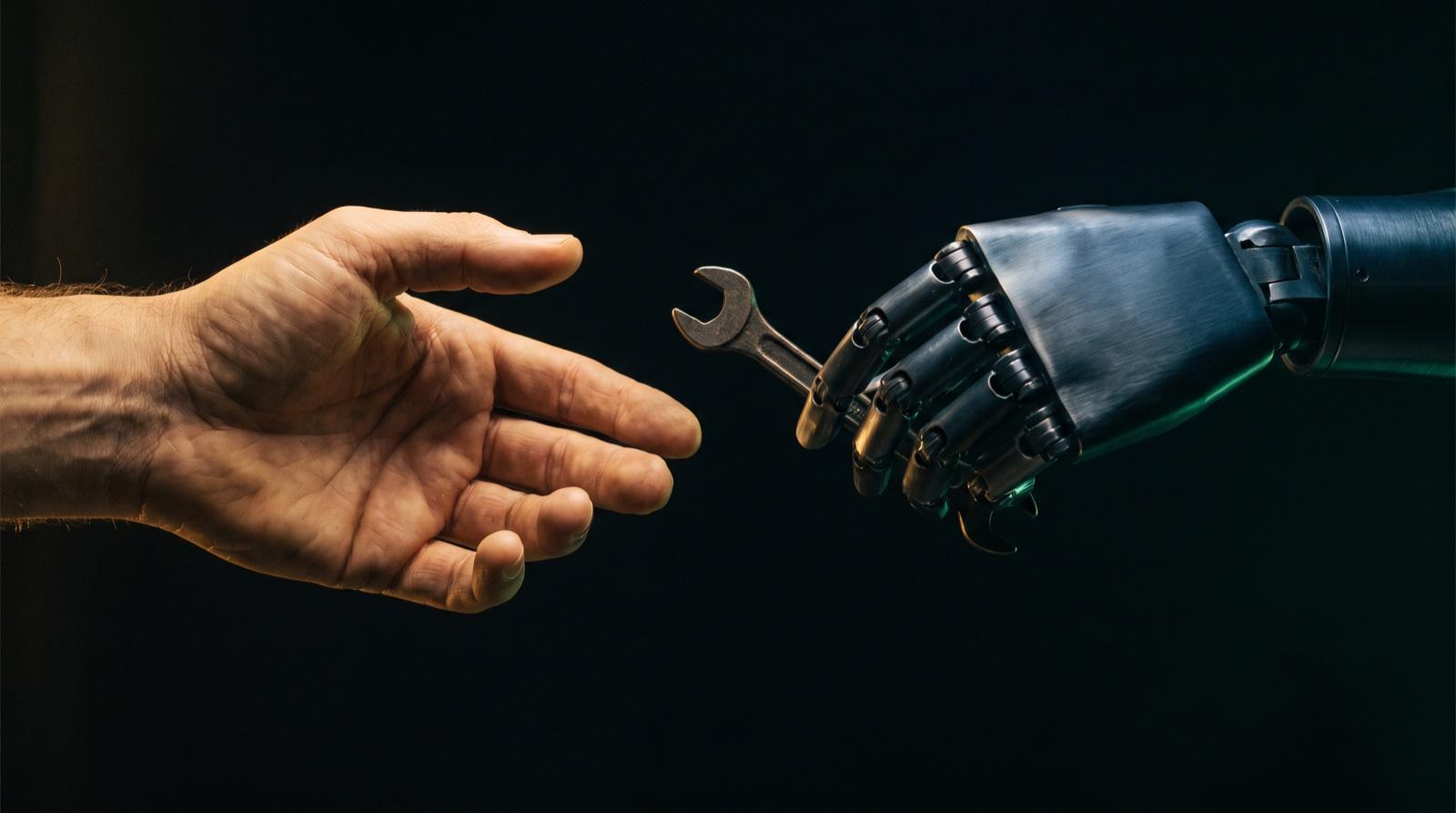
Sol Rashidi was appointed the world's first Chief AI Officer nearly a decade ago, and was in the room when IBM took Watson to market. She is not an AI skeptic. She calls herself a big fan. Which is what makes her warning worth hearing.
She calls it intellectual atrophy: the slow, quiet erosion of the ability to think deeply, critically, and independently — the faculties that let anyone create, invent, and solve problems that have not been solved before. Her fear is not that machines take the work. It is that we hand over the thinking along with the work, and only notice years later.
The story that makes it concrete
She gave the same marketing assignment to two analysts. The junior one delivered in a week. The senior one took three. Both deliverables were, in her word, beautiful — well presented, full of quotes and statistics. Her team thought they had a prodigy.
Then they got in a room and asked questions. Consumer behaviour. Preferences. Market share. Barriers to entry. The junior analyst had no answers. The senior analyst did, because she had done the research herself.
Same polish. One had depth; the other was surface. The difference only surfaced under questioning — which is exactly the kind of test that most work never receives until it matters.
The policy she instituted afterward is the whole argument in one line: use AI to execute your work, not to do your thinking for you. One expedites. The other replaces.
Why this is the other half of the argument
We wrote recently about Alexander Wissner-Gross's claim that AI's progress has been data-set constrained rather than compute constrained — that the corpus, not the chip, is what is actually scarce. Rashidi is pointing at the same scarcity from the other side.
If everyone is one prompt away from a competent first draft, then the draft stops being the differentiator. What remains scarce is the thing that produced the judgment: the research you actually did, the failures you actually had, the context you actually accumulated. That is a record — and records can be kept or thrown away.
Her prescriptions are practical. Master your craft rather than accumulating superficial knowledge. Build cross-disciplinary strength, because the connection between two fields is where the insight lives and where models are weakest. Treat AI as a collaborator producing a first draft, not a vending machine you copy from. Keep a human in the loop wherever the decision matters — and note her sharpest line on that: you cannot question the results if you do not know the field.
What we take from it
There is a version of AI adoption where you get faster and hollower at the same time, and the hollowing is invisible until someone asks a follow-up question.
The alternative is not using less AI. It is keeping the record of your own thinking as you go — the decisions, the dead ends, the reasoning behind the choice — so that your judgment compounds instead of evaporating with each closed tab. Speed you can buy from a model. Depth only accrues to whoever kept the notes.
That is the whole reason NouGenShards exists. Not to think for you. To make sure the thinking you already did is still there tomorrow.
Keep your own record
NouGenShards scans your machine for scattered AI traces and unifies them into local, encrypted memory you own.
Explore NouGenShards